How to Unblur Old Photos and Bring Faces Back Into Focus
Unblur old photos from box cameras, cheap film cameras and copies of copies: why old photos are soft, how AI unblurs faces and how to capture prints sharply.
By Ayoub Farid · · 2 min read

Many old photos were never razor sharp. Box cameras had simple lenses, film was grainy, people moved during long exposures, and many prints in family albums are copies of copies. Decades later, the softness makes faces hard to read. AI can bring a lot of that clarity back.
Why old photos are blurry
- Simple lenses: box and instant cameras had fixed-focus plastic or single-element lenses.
- Long exposures: people moved, especially children.
- Reprints and copies: every copy generation loses sharpness.
- Small negatives: 110 and 126 film formats were tiny, so prints from them are soft.
- Degradation: fading and haze reduce perceived sharpness.
Start with a sharp capture
A blurry capture of a blurry photo is twice as blurry. When capturing:
- Use bright, soft light so the camera uses a fast shutter.
- Tap to focus on a face.
- Use a flatbed scanner for small prints if you have one (see best DPI for scanning photos).
- If several prints of the same photo exist, use the sharpest one, ideally the original rather than a reprint.
Unblur with AI
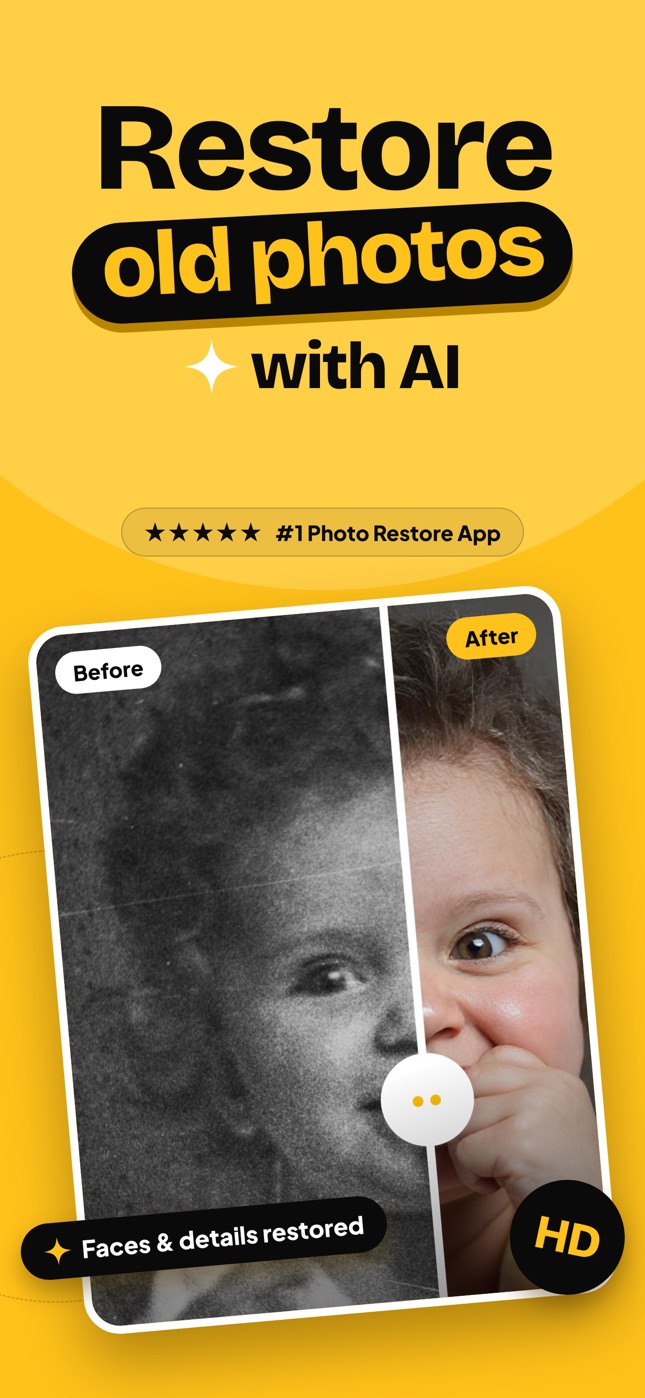
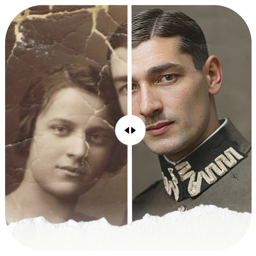
In Refixo, choose the photo and tap Restore. The AI sharpens faces and details, reduces grain and noise, and also fixes the fading, scratches and color problems old prints usually have. Drag the slider to compare.
AI is particularly effective on:
- Slightly soft portraits.
- Group photos with medium-sized faces.
- Prints that are hazy from fading.
It's less reliable on very small faces in large groups; crop and restore those separately (see sharpening faces in old photos).
Check the likeness
Unblurring involves reconstruction. Compare carefully:
- Do eyes look in the same direction?
- Is the smile the same smile?
- Are glasses, moles and hairlines unchanged?
Ask someone who knew the person. See is AI photo restoration accurate?
Old negatives are often sharper
If the family still has negatives, scanning them can give a sharper starting point than the print. See digitizing negatives with your phone.
Related: how to fix blurry photos and upscaling old photos.
Box camera snapshots
Family snapshots from the 1920s–1960s were often taken with box cameras such as fixed-focus models with simple lenses. They focused best at a medium distance, so people standing very close to the camera are often soft. These photos respond well to AI sharpening because the blur is gentle and even.
Frequently asked questions
Can AI unblur a very old photo?
Yes, in most cases. Soft faces and details improve dramatically. Severe motion blur and tiny faces are harder.
Why are my grandparents' photos so blurry?
Simple cameras, long exposures, tiny negatives and reprints all contribute.
Is the unblurred face accurate?
For moderately soft faces, very close. For very blurry ones, the AI reconstructs detail, so check with people who knew them.
Should I unblur before or after colorizing?
Before. Refixo does restoration (including sharpening) and colorization in the right order.
Restore it in seconds
Bring your old photos back to life
Refixo's AI removes scratches, tears and stains, sharpens faces and colorizes black & white photos in seconds. Free to download on iPhone and iPad, with a 3-day free trial.
Download on theApp Store